Journalists safety


Journalists safety
‘We work under siege’: The impact of Neurology on violence against journalists & new psychological rehabilitation program
By :Miral AlAshry, Associate professor at Canadian International College (CIC)
Journalist consultant at International Federation of African Women
Journalist consultant at World Federation of United Nation ( Cairo – Egypt )
The practice of journalism is increasingly dangerous and attacks on journalists continue unabated. During Arab spring revolutions, there have been serious challenges to press freedom in the Middle East, a particularly troublesome feature of this violence is that a rising number of journalists are being kidnapped for ransom or held as hostages.
The Reporters Without Borders confirmed that 2012 was the deadliest year for journalists in numbers 88 journalists were killed , 879 arrested. In addition, in 2017 six media assistants and 47 citizen-journalists were killed, and 144 bloggers and netizens were arrested. and the percentages increased to At least 81 reporters were killed doing their jobs. More than 250 journalists were in prison in 2018.
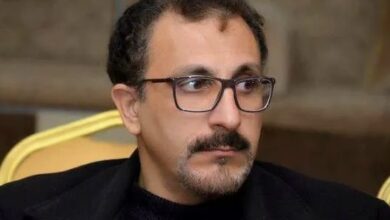
Massoud Akko Syrian journalist said, ” we can see this growing global problem threatens the practice of journalism and the ability of news media to fully inform the public about events occurring in the world. Journalists and media workers are highly vulnerable to kidnappings and sexual violence because they often work in dangerous zones”.
Violence against journalists is sadly an important issue that is rarely openly confronted. There are at least three different ways in which violence against journalists occurs. One is during the course of reporting dangerous events such as wars and conflict zones where a journalists. Second, is state-sponsored violence in the form of arbitrary arrest, imprisonment and torture of journalists, amongst whom number many women. And a fourth form includes trolling and other forms of sexualised hate speech that journalists encounter on the internet.
The impact of Neurology on violence against journalists
This year, Miral AlAshry Associate Professor and journalist, collaborated with International Federation of African Women on a project, to find out the Sexual violence against journalists when they covering war through 50 journalists from Middle East they had Sexual violence. She discovered that “Journalists who cover conflict in the Middle East are exposed to a host of stressors that can exert a deleterious effect on their emotional and physical well-being. Intimidation, assault, mock execution and witnessing death and suffering are just some of the occupational hazards that come with the job. These hazards can explain why the lifetime prevalence rate for posttraumatic stress disorder in journalists who have worked for over a decade in zones of conflict approaches that seen in combat veterans and exceeds fivefold the rates in the journalists . As the dangers increase, so do the psychological sequelae. Recent data obtained from Middle East journalists covering the Syrian and Libyan war, an internecine conflict in which journalists have become targets, indicate a particularly high rate of depression.”
In addition, she developed the study to know the impact of Neurology on violence against journalists by interview with Ahmed Gaber, Professor of Neurology Ain Shams University he said, ” Until very recently research on the harmful effects on journalists is high blood pressure and Epilepsy, because the journalists were exposed to trauma cause psychological disorders. So that, he develop a new approach about the side effects of the Hippocampus functions Hippocampus, belongs to the limbic system and plays important roles in the consolidation of information from short-term memory to long-term memory, and in spatial memory that enables navigation. If journalists are attacked more than once, this will focus on long memories”.
Furthermore, the brain regions posterior cingulated cortex, Hippocampus involved in processing emotional stimuli, episodic memory retrieval, detecting threats in the environment, memory encoding, and motor programming. This combination of activation in areas linking memory and emotion to motor activation suggests that viewing violence could integrate existing aggression-related thoughts and feelings, potentially facilitating aggressive behavior by increasing the strength or accessibility of aggressive behavior scripts in memory.
There is recent evidence that exposure to violence may be linked to decrease in the activity of brain structures needed for regulation of aggressive behavior and to increases in the activity of structures needed to carry out aggressive plans. The anterior cingulate cortex (ACC), located in the medial frontal lobe, has been linked to aggressive.
New Psychological rehabilitation program
Millions of journalists are the victims of violence in societies, so that the study recommends we should develop new psychological rehabilitation program for journalists, which is firstly, “trauma exposure,” must be made by exposing journalists to watching live videos in closed four-dimensional rooms that will qualify the journalists for the reality of the field, and avoid many risks because the exposure to the initial trauma gives signals to the brain of the incidents prior to its action. When the reporters go to the field, these events will be seen beforehand and the avoidance of shocks will occur.
Secondly, through psycho-drama, before going to the field, journalists should watch a play demonstrating all sorts of violence that they could be exposed to such as assault, threats and harassment and how to deal with those circumstances and face them.
Thirdly, in the conflict zones, they should have psychological support by a trained psychiatrists to be able to deal with stress, pressure, tension and depression of the individuals in a professional way. Moreover, train them to diagnose the various disorders that are common in such cases, such as anxiety, fears and depression and avoid injury once more.
Ahmed Gaber, Professor of Neurology Ain Shams University
Miral AiAshry, Associate Professor
Media Advisor at International Federation of African Women.
Massoud Akko Syrian journalist